
How to Get Court Records
One office handles the files for both Superior Court and District Court in the county. That office is the Clerk of Superior Court. For case numbers, public case information, or an eligible Case Summary, start online. Begin with the North Carolina Judicial Branch Portal. Keep its limits in mind. The Portal is a statewide eCourts service. It is not a Stanly County database, and its own guidance says plainly that it is not the official court record. Need a filed document, a paper file, a certified copy, or help with something not displayed publicly? The clerk route is the right one. The public terminal at the courthouse works. So do the clerk counter and a phone call to the clerk. The clerk offers no copy-order email address and no local records web form, and it promises no turnaround time. Mail works only after the clerk confirms the item and the method. Local payment information lists a mailing address and payment limits, but that does not make every request a mail-order service. The NCAOC public-records form covers Administrative Office of the Courts records, not a Stanly County case file.
- Use the Portal to locate the case number, party name, and publicly available Case Summary or Case Events.
- Decide whether the need is case information, an underlying filed document, a plain copy, a certified copy, an exemplification, or a proceeding transcript.
- For file review or a copy, use the public terminal or contact the Stanly County Clerk of Superior Court with the case number and the precise item sought.
- Call before mailing anything. Ask whether the item is public, whether it can be copied, the total charge, and whether pickup or a clerk-approved mailing method is available.
- Use the NCAOC request process only for NCAOC administrative records; direct county case-file questions to the Stanly County clerk.
Note: A Portal result can identify a case, but certification and paper-file access stay with the Stanly County clerk.
Stanly Portal Record Limits
Stanly County joined eCourts on October 14, 2024. The Portal is now the normal online entry point for eligible court information. Smart Search finds a case by party, record number, citation number, attorney or business information. It also covers other published search modes. Its Case Summary may include Case, Assignment, Party, Case Events, disposition, hearings, and financial sections. Exactly what appears depends on the case and the public-access rule that governs it. Treat the Portal as a helpful index, nothing more. It does not prove that every document is available or that the displayed data is complete. A Case Event is the court system's chronological activity entry. It can point to a filing, notice, hearing, order, disposition, or payment event. Yet it is not necessarily the filed document itself. Registering for the Portal unlocks features such as My Cases. But it grants no access to restricted material. When a Stanly County court record must be official, ask the clerk. Request the document or a certified copy.
Types of Court Records
The Stanly County Clerk of Superior Court maintains records, files, dockets, and indexes for civil actions, special proceedings, estates, criminal actions, juvenile matters, judgments, and liens, subject to confidentiality laws. What you ask for depends on the layer of information you need. The court docket is the running index of activity. The court file holds the underlying records. A certified copy comes from the clerk. It carries official weight, unlike a printed online screen.
- Case Summary and Case Events, the public-facing Portal history where eligible.
- Filed pleadings, motions, notices, orders, judgments, and other documents in the Stanly County court file.
- Criminal and traffic case materials kept through the clerk and District Court system.
- Civil actions, special proceedings, estate files, and public indexes maintained by the clerk.
- Certified copies, exemplifications, and judgment transcripts when a specific official court document is required.
Some District Court criminal proceedings are not recorded at all. A clerk copy is not the same thing as a hearing transcript. Note: State-court files and Portal case information can overlap, but they are not interchangeable versions of the same requested document.
Stanly Clerk Court Record Terminal
The best in-person option is the clerk's office. It sits at the Stanly County Courthouse. Judicial Branch records guidance says every clerk's office has a public self-service terminal. On the criminal side, search by defendant. You can also search by case number or victim/witness. A separate terminal route covers civil, special-proceeding, and estate records. Need a paper file? That same guidance sends you to the county clerk. The Judicial Branch's court-records guidance lays out this access path in full.
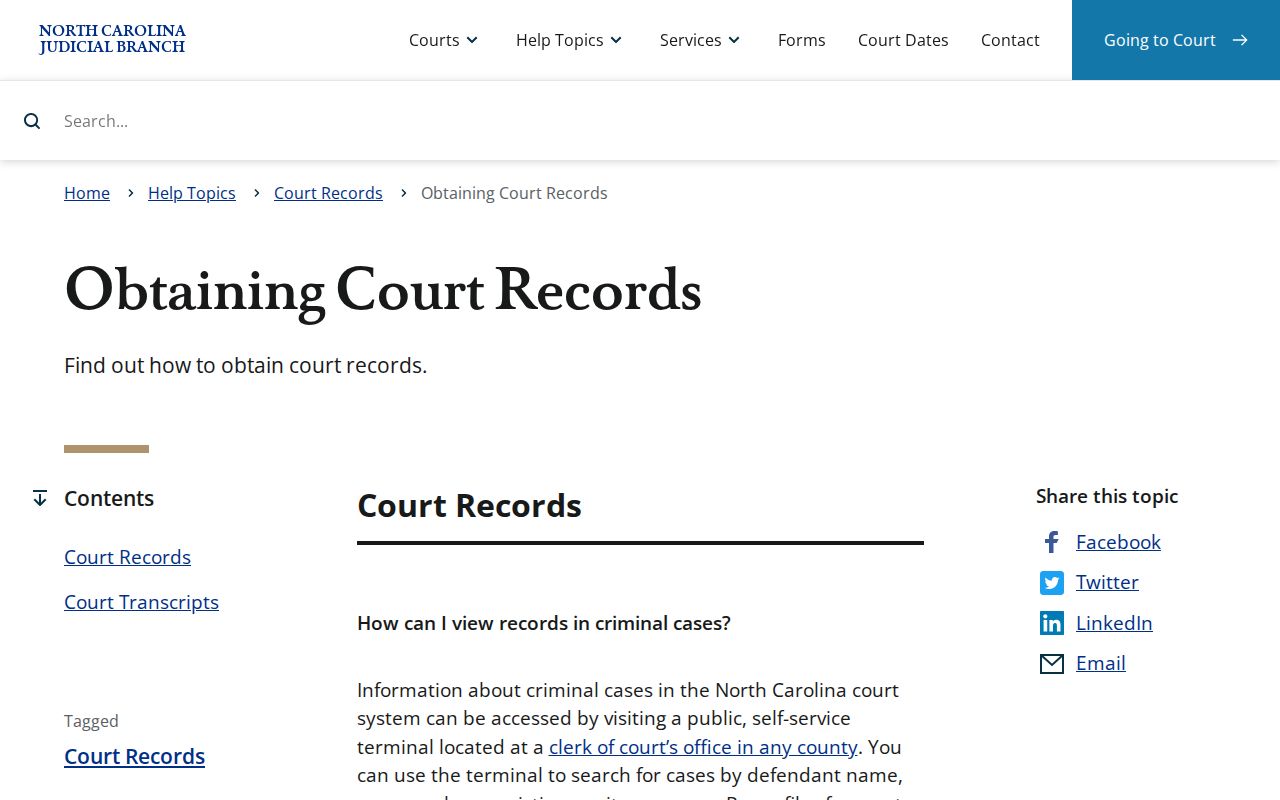
Use the terminal to narrow down a Stanly County record request. Then ask the clerk about the public status and copy options for the specific file. The clerk sets no separate terminal room, no separate terminal hours, and no promise of document-image access beyond the office itself.
Stanly County Clerk of Superior Court
Stanly County Courthouse
201 S. Second St.
Albemarle, NC 28002
(704) 986-7000
Monday through Friday, 8:30 a.m. to 5:00 p.m.
What a Court Record Contains
No single format defines a Stanly County court record. The Portal's published Case Summary categories describe the common case-level view, while the clerk file may hold the documents behind those entries. Every field remains subject to the case type and public-access limits. Need to tell one Stanly County matter from another? The record number is usually the clearest tool. The Portal's published case-number example is 21CR000003-910.
| Case / Assignment | Available case number, case type, court or location, status, filing-related details, and assignment information. |
|---|---|
| Party | Party-role and name information, with masking or restrictions where required. |
| Case Events | Date-ordered filing, notice, hearing, order, disposition, or payment-related activity. |
| Hearings / Financials | Scheduled-event and available payment-related sections, which may not appear for every public case. |
| Filed documents | Pleadings, orders, judgments, and other material in the clerk file when public and available for review or copying. |
Historical converted events can display a time of 12:00 a.m. in the Portal. That convention says nothing about when a real court event actually occurred.
Stanly Court Files Versus AOC
Skip one common wrong turn. Do not send a Stanly County case-file request to the North Carolina Administrative Office of the Courts. NCAOC says plainly that it is not the custodian of court documents or case information. It points every case-file request back to the clerk of the county where the case was filed. Where does a Stanly Superior Court, District Court, estate, or special-proceeding file live? With the Stanly County Clerk of Superior Court. The clerk's office holds the docket. It holds the file itself. The NCAOC public-records policies lay out that agency's separate records process.
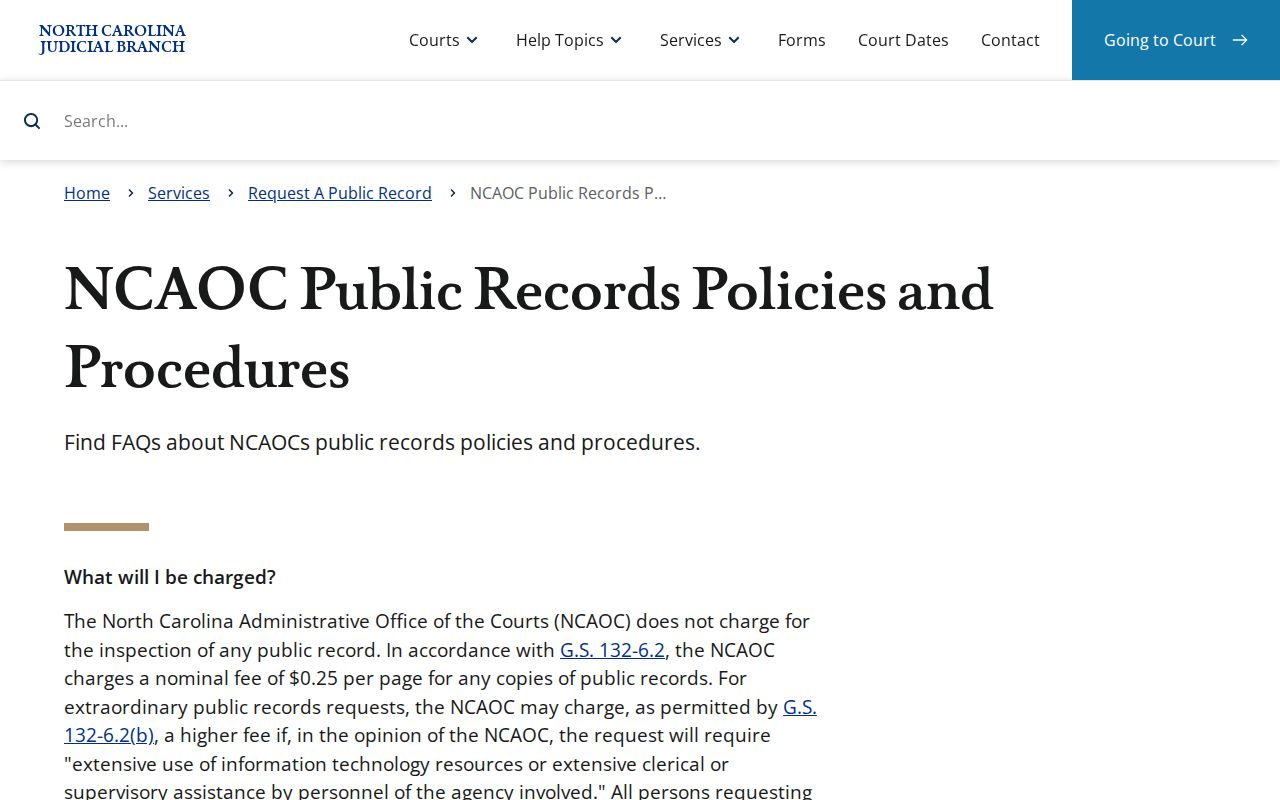
The line matters in practice. A Stanly County request kept at the clerk's office stays with the office that actually holds the case file. An administrative form is no workaround for a restricted or unavailable court document.
Certified Copies and Fees
Match the copy to the job. A plain copy works when the receiving party only needs the information. Order a certified copy instead. Do that when you have been told that an official clerk certification is required. An exemplification is yet another form of authentication. Ask for one only after the receiving court or agency confirms it. Because copy preparation and certification can be separate statutory charges, have the clerk confirm the total before payment.
| Item | Statutory amount |
|---|---|
| Prepared copy | $2 for the first page and $0.25 for each additional page |
| Certified copy or certificate under seal | $3 |
| Exemplification | $10 |
| Judgment transcript | $10 |
| Criminal record search | $25 |
The fee schedule comes from G.S. 7A-308. That statute sets what the clerk collects. One caution: a judgment transcript is a statutory court document, not a verbatim transcript of a hearing, so confirm the exact document and total with the clerk before paying, since certification and copy preparation may both apply.
Stanly Transcript and Court Record
A transcript answers a different question from a Stanly County court record copy. The clerk keeps the docket, the file, and official copies. A hearing transcript comes from a court reporter or a digital-recording channel. The reporter sets the cost case by case. The official local directory lists the court-reporter line as (704) 986-7094. Ask that office about the particular proceeding. Do not ask the clerk to turn a filed order into a transcript. Not all District Court criminal proceedings are recorded. Judicial Branch guidance identifies limited exceptions. It also notes that a judge may order recording. So gather the case number, hearing date, court, and requested product first. Then begin the Stanly County transcript inquiry.
Stanly Court Record Certification Path
Start by naming the case and the exact document. The same steps govern a certified Stanly County judgment, an order, or any other court record. Contact the clerk to ask whether the document is public, whether certification or exemplification fits, and how the fee schedule applies. The clerk can also confirm pickup or mailing. Stanly County publishes no local online copy form or email intake path. None of it carries a processing-time promise. Plan on phone or in-person contact. The Judicial Branch public-records request information shows the agency request route.
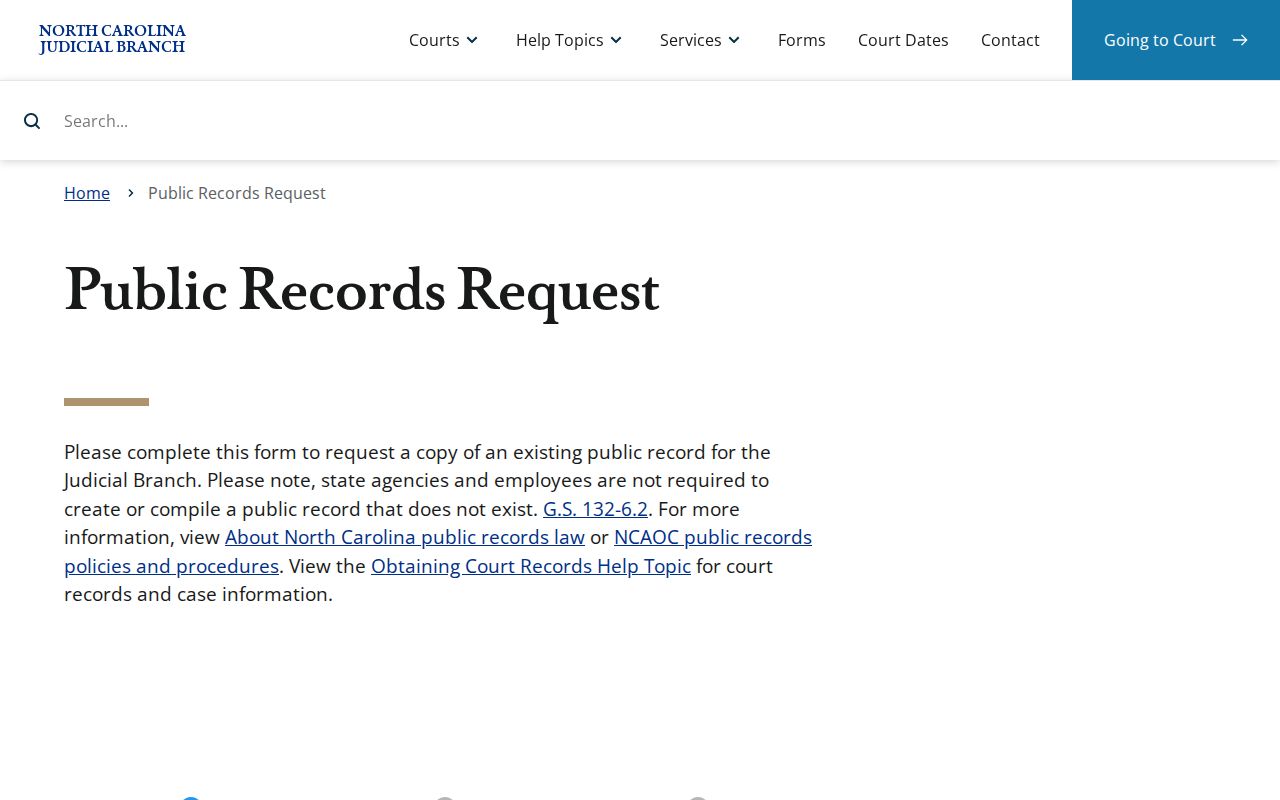
The custody line stays the same. For any Stanly County case document, confirm with the county clerk rather than assuming an NCAOC administrative form will produce a local court file.
Stanly Court Record Payment Methods
Payment comes after the clerk confirms a charge. Stanly County's local payment information lays out the practical choices. At the cashier, the listed methods are cash, money order or certified check, and Visa, Mastercard, American Express, or Discover debit or credit cards. Card use can carry processing fees. Eligible online payments also use a card and may carry processing fees. That does not make every court-record copy payable online. A clerk-approved mailed payment goes to "Stanly County Clerk of Superior Court" at P.O. Box 668, Albemarle, NC 28002. Do not mail cash. Do not mail a personal check either. The safest sequence is to call with the record request first, then follow the payment and delivery instructions the clerk gives for that item.
Public Access and Sealed Records
Public access to Stanly County court records has real limits. The Portal may hold it. Ordinary nonconfidential case information can sit there or come through the clerk. The Portal is not the official record. A missing online result does not prove a file never existed. A matter may be sealed, expunged, juvenile, restricted, or older. It may be still processing. It may have been searched with an incomplete term. Personal identifiers may also be masked or removed from public material.
Key Rules:
G.S. 7A-109 requires clerks to maintain court records, files, dockets, and indexes while recognizing confidentiality rules.
G.S. 132-6 provides the public-record inspection and copy baseline, subject to lawful restrictions and safeguards.
G.S. 1-72.1 provides the court-access route for a nonparty seeking a sealed civil record.
G.S. 7B-3000 protects juvenile-record confidentiality, and G.S. 15A-151 addresses confidentiality after criminal expunction.
The public-record inspection statute is available from the North Carolina General Assembly.
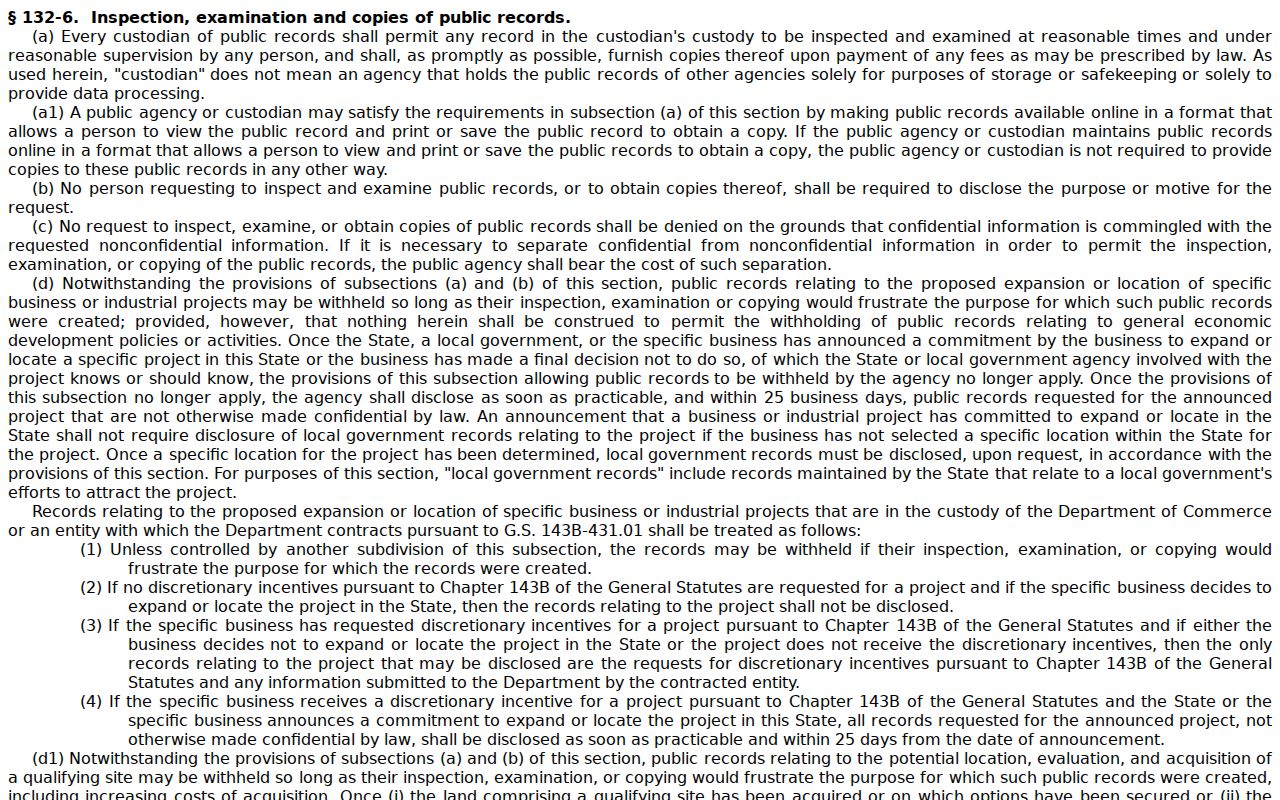
The statute opens the door to public material. It does not unlock every document. Even when a case name or docket entry appears in public-facing Stanly County court information, a lawful confidentiality limit remains in force.
Stanly Court Record Restrictions
Sealed civil records require a nonparty to use the statutory court-access process. Juvenile records stay confidential even when a hearing itself is open. The Portal FAQ names sealed and expunged matters as examples. Unreturned criminal warrants count too. So do certain protective-order information and protected personal data. None of it shows up as ordinary public search results. Registering for an account does not remove those limits. Neither does taking a screen image or filing an administrative request. The official expunction materials name a destination. They direct a Stanly County petitioner to the clerk of the county where the charge or conviction occurred. When access is uncertain, name the case to the clerk. Ask whether the file is public. Never infer a final answer from an empty search screen. A prior docket entry settles it just as little.
Stanly Court Record Request Follow-Up
When the Portal, the calendar, or a terminal fails to answer a Stanly County records question, pick up the phone. Dial (704) 986-7000. Give the clerk a case number or a party name. Name the document you need. Ask if the file is open to the public. The clerk can tell you whether a plain copy, a certified copy, or a separate transcript request fits your needs. That same call should settle the total charge and whether the office can mail the record to you. Stanly County court records stay in the county where the case was filed. That holds no matter where an event happened. A matter that began in Albemarle, Locust, Norwood, Oakboro, or Badin still lives in the county file. City offices and police agencies keep their own government records, but they do not hold the state-court case file.
Note: Have the court date or case number in hand when you call. A precise identifier keeps similar Stanly County matters from getting mixed up.