
How to Search Criminal Dockets
Start online. The North Carolina Judicial Branch Portal is the state-linked route to an eligible Stanly County criminal docket. It is free with no registration. Smart Search takes a case number, party name, or citation number. Attorney identifier, record number, business name, cross-reference, or even a nickname also work. Filter by Stanly location, Criminal Actions, status, or file date when those controls appear.
The case number is your best tool. A typical Stanly format looks like 21CR000003-910: two-digit year, case-type letters, six-digit sequence, three-digit county code. Searching by party works too. Just remember that a blank result does not prove no Stanly County criminal docket exists.
- Open Portal in Chrome or Edge and choose Smart Search.
- Enter the strongest identifier, then narrow the location to Stanly when offered.
- Open the eligible Case Summary and read its Case Events in date order.
- Use Search Hearings or the county calendar for a current court date.
- Ask the Clerk of Superior Court for paper-file review, an official copy, or help with an unavailable result.
Stanly County Criminal Portal Citation Searches
Have a citation number? That is a published Portal search path for a Stanly County criminal docket. It fits infractions or any matter that began with a citation. Portal does not split felony and misdemeanor into separate Stanly sites. Your results depend on the identifier you enter and the filters on offer.
For a scheduled appearance, use Search Hearings. The Portal training materials list six search types. Case number, party, business, and attorney are some of them. Judicial officer and courtroom are the rest. Pick Stanly where the location control shows up, and treat what you see as case information rather than a certified record.
| Portal control | Useful Stanly criminal use |
|---|---|
| Smart Search | Case number, party name, citation number, or another published identifier. |
| Location | Narrow a broad result set to Stanly County when available. |
| Case type and status | Refine an eligible result without assuming every live option was verified. |
| Search Hearings | Look for a scheduled criminal event rather than the full case history. |
Note: Portal information can process near real time, but processing volume and access limits can delay public visibility.
What a Criminal Docket Shows
Inside a Portal case, Case Summary gives the case-level view. Case Events lists activity in order. Published categories can include Case, Assignment, Party, Case Events, disposition, hearings, and financials. Which ones appear varies with the case and your access level. So an eligible Stanly County criminal docket never promises every field or document.
Find the newest dated event first. Then check the hearing area or Search Hearings for the current setting. A generic screen label does not guarantee a charge description, statute citation, document image, or financial detail behind it. Confirm the material facts in the summary or with the clerk.
| Case and Assignment | Published categories for the identifier, court or location, status, and assignment information where public. |
|---|---|
| Party | Party information may appear, subject to masking and access limits. |
| Case Events | Date-ordered filings, notices, hearings, orders, dispositions, or payment-related activity where shown. |
| Hearings and financials | Published categories that may provide event or payment information, depending on access. |
| Restricted material | Warrants, protective-order information, juvenile matters, and sealed or expunged material may be absent. |
Stanly County Criminal Case Events, Not Codes
Stanly County publishes no abbreviation list for criminal docket codes. So do not invent a meaning for an arraignment or disposition abbreviation. The one verified term is Case Events. That is the chronological activity list in a Portal case view.
Watch for 12:00 a.m. times on older converted events. That timestamp often reflects historical conversion, not a midnight court hearing. Read the date, the event description, and the current hearing information together. Draw no conclusion before that.
- Arraignment
- A criminal appearance concerning the charge and plea process.
- Continuance
- A court-approved move of a pending setting to another time.
- Disposition
- The recorded resolution or status outcome of a charge or case.
Stages on a Criminal Docket
A criminal docket records what happened. It does not predict a result. A Stanly County case may show the initiating charge or filing, a preliminary appearance or bond-related event, arraignment, pretrial or motion work, a plea or trial, disposition, sentencing when applicable, and an appeal-related event. Not every case hits every step.
Docket flow: Filing → Arraignment → Pretrial → Plea or Trial → Disposition → Sentencing.
Note: A passed calendar date does not establish that a criminal case ended or that a new setting was not entered.
Stanly County Criminal Hearing Search Options
When the question is a Stanly County court date, Search Hearings is the better Portal route. Criminal is one of its published hearing types. Civil, Family, Probate, and Mental Health are the others. The state Court Dates service also points users to Portal and local calendars.
Cross-check Case Events against the North Carolina county calendar service. A calendar groups cases for one session. Case Events gives the full history of a single case. If a recent change matters, contact the Clerk rather than trusting an older calendar.
Which Court Holds Criminal Dockets
Felony cases in Stanly County belong to Superior Court. Misdemeanors and infractions, including ordinary traffic matters, go to Stanly County District Court. Magistrates handle specified preliminary criminal functions. Both trial divisions share one Clerk of Superior Court office, so there is no separate county criminal clerk for each.
The official Stanly County court location page lists Superior Court District 28, District Court District 28, and Prosecutorial District 28. Portal, Search Hearings, the clerk file, and local calendars are the practical access channels. Qualifying appeals go to the Court of Appeals, not the Stanly trial docket.
| Stanly court | Typical criminal docket work | Search or ask |
|---|---|---|
| Superior Court | Felony cases and trial-court appeals. | Portal, Clerk file, and Superior calendars. |
| District Court | Misdemeanors, infractions, and ordinary traffic matters. | Portal, Search Hearings, Clerk, and local calendars. |
| Magistrate | Preliminary criminal functions. | Clerk or magistrate inquiry, with Portal access where public. |
Stanly County Criminal Felony and Misdemeanor Dockets
The court split decides where a Stanly County criminal matter is heard. It does not create separate online portals. Use the same Portal search route and apply location and case-type filters when available. A Superior or District assignment tells you the trial division. It never tells you the outcome.
For a transfer, consolidation, appeal, or reopened history, Portal supports case cross-reference searching. No Stanly-specific list decodes each transfer marker. Treat a cross-reference as a clue to related history, then confirm it in a Case Summary or the clerk file.
Note: Division labels identify jurisdiction. They do not establish a public finding about any individual criminal case.
Stanly County Criminal Clerk and Reporter Roles
For criminal files in Stanly County, the Clerk of Superior Court is the office to contact. The clerk keeps the criminal case files, dockets, and indexes. Need an official copy or a paper-file review? That office handles those requests, along with older files and any result that will not show up online. Transcripts are a different matter. Those requests go to the court reporter, not the clerk copy counter.
The Stanly contact directory keeps the two offices separate. That spares you from sending a file request to the magistrate or a transcript request to the clerk. One courthouse system serves Superior, District, and magistrate functions.
Court Reporter Line
For transcript or recording inquiries rather than clerk-file copies.
(704) 986-7094
Stanly County Criminal Portal and Official Copies
Portal is a free public search tool for case information. It is not the official court record. An eligible Case Summary can help you locate a Stanly County criminal docket, spot an event, or check a hearing. Certification and paper-file questions belong with the clerk. For a charging document, an official copy, or material that never appears online, pull the case number first. Then ask the clerk what is public and available. The statewide court-records guidance separates clerk-held files from transcripts. It also points requesters to the right office.
Public Access and Sealed Criminal Dockets
Much of Stanly County's criminal case information is public. Portal can search it, and the Clerk can let you inspect the files. Not everything appears there. Juvenile records are confidential. Sealed or expunged matters are not public Portal results. Restrictions can also cover unreturned warrants, certain protective-order details, and protected personal identifiers. The statutes below draw these limits, though an absent search result says nothing about a person or case, and the clerk remains the source for any official record once access is authorized.
Key Rules:
G.S. 7A-109 requires clerks to maintain court records, files, dockets, and indexes while recognizing confidentiality exceptions.
G.S. 7B-3000 makes juvenile records confidential except for statutory or court-authorized access.
G.S. 15A-151 establishes confidentiality protections after a criminal record has been expunged.
The criminal-expunction confidentiality statute supplies this court-record boundary.
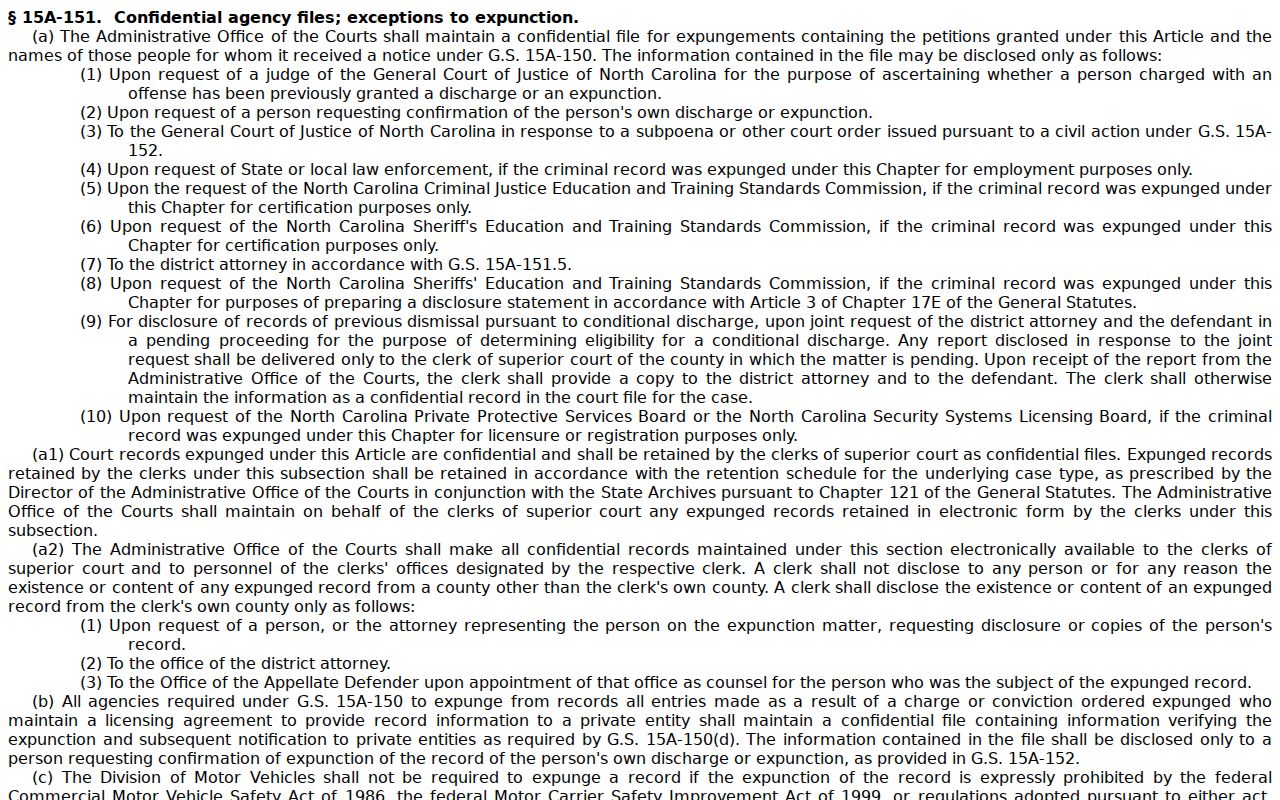
That is why a normal Stanly County criminal docket search can never be read as a complete archive. The juvenile-record confidentiality statute marks another boundary.
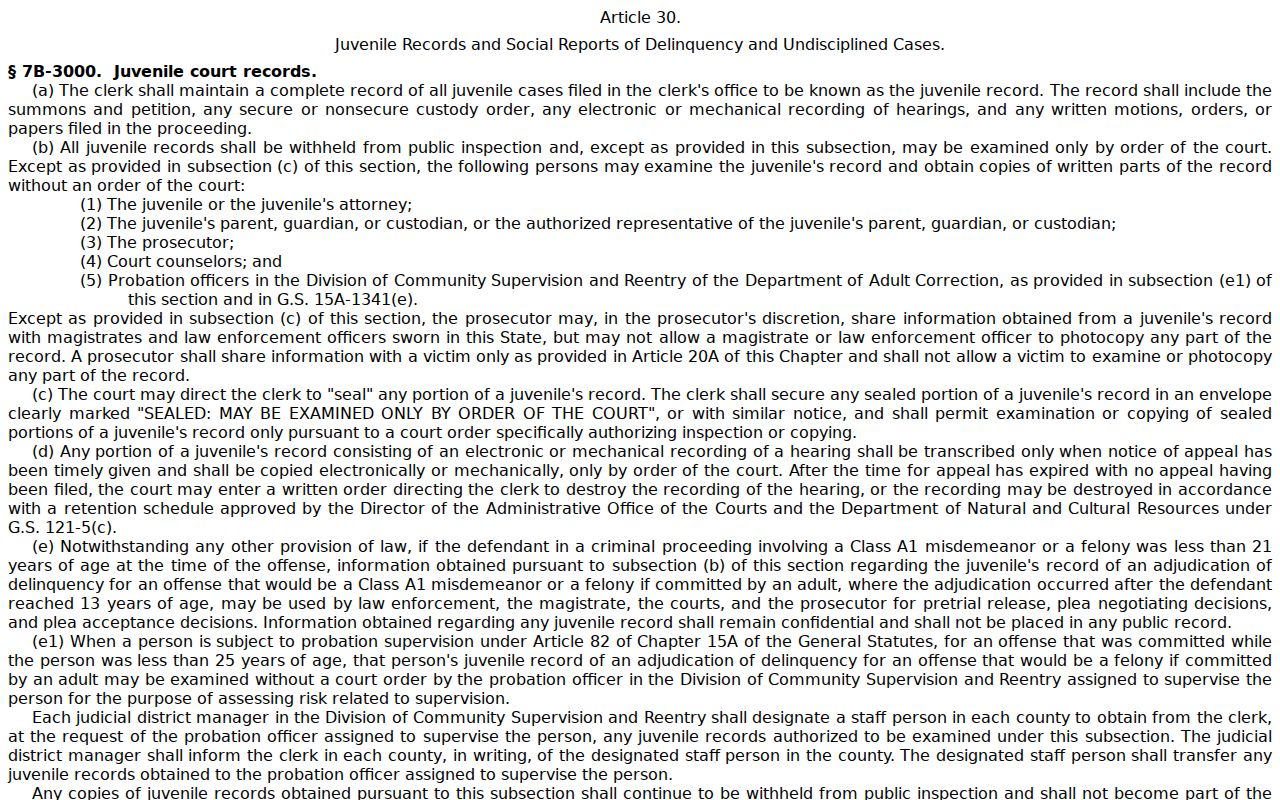
Juvenile material stays closed. Searching adult criminal dockets online does not open it. A Portal account adds My Cases features, but no entitlement to confidential or sealed records comes with it.
Stanly County Criminal Search Access Boundaries
No public result? Check the identifier first. Then check location, case type, and current hearing information. A record can be older, still processing, mis-keyed, juvenile, sealed, expunged, or restricted. The next step is the clerk or the courthouse terminal, not a registration workaround or a screen capture. The official North Carolina expunction guidance says a petition is generally filed with the clerk in the county where the charge or conviction occurred, and it may take months or require a hearing.
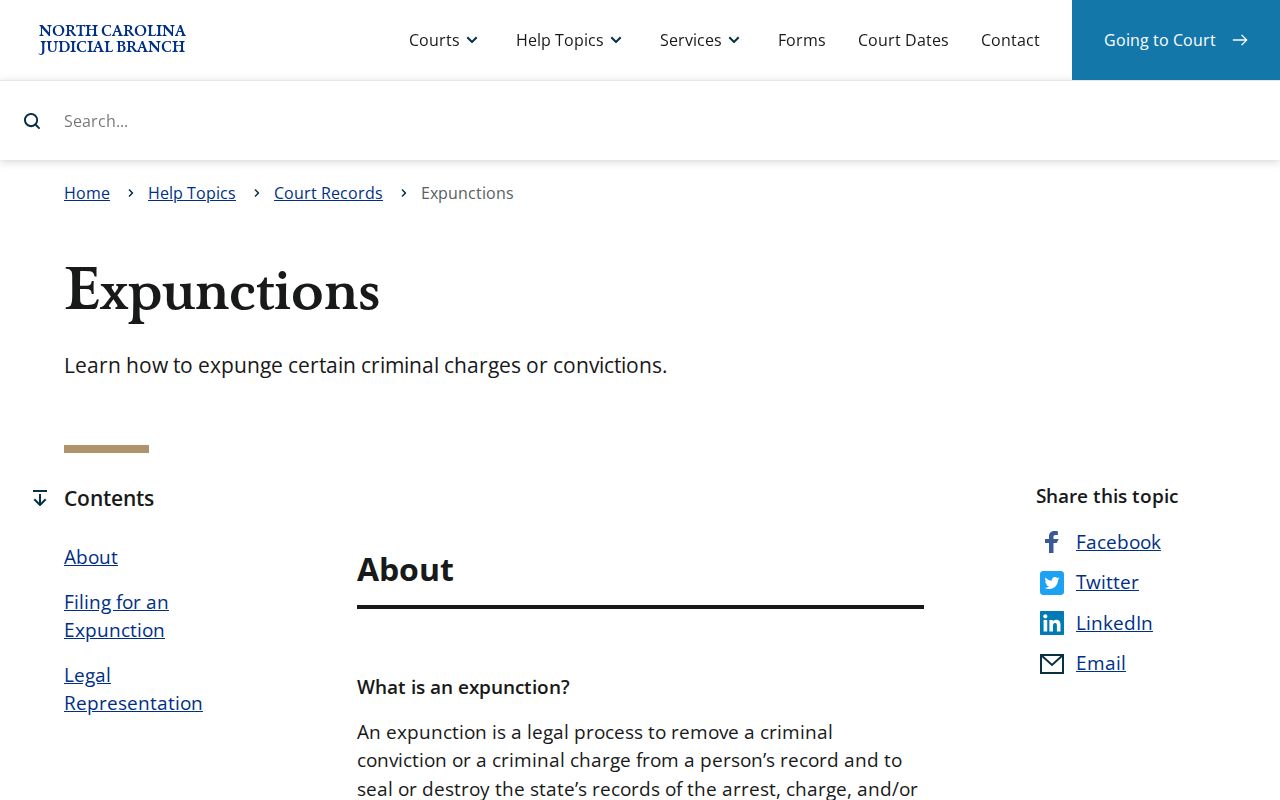
The Stanly Clerk handles corrections after an expunction order. For the statewide juvenile side, the Judicial Branch juvenile delinquency access guidance provides the related explanation.
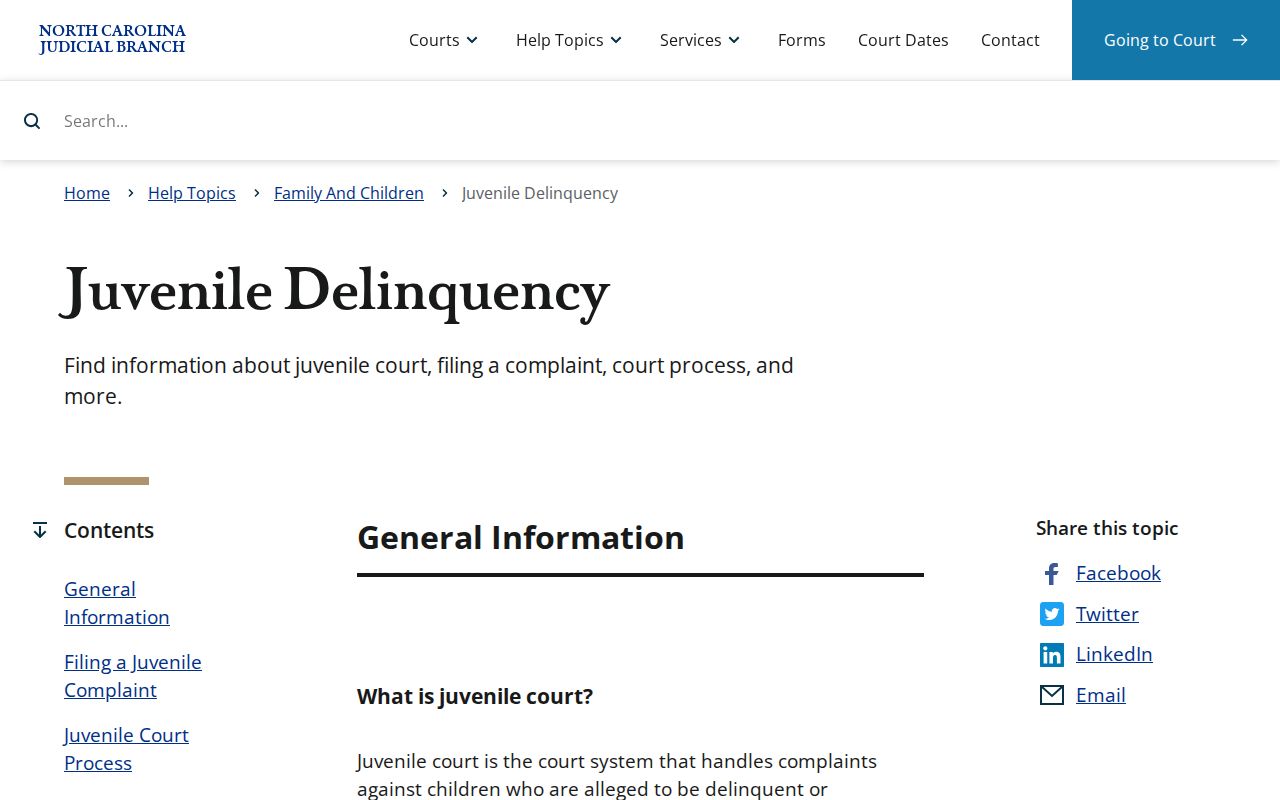
Juvenile access has its own rule, open hearing or not.
Stanly County Criminal Date Confirmation
An old calendar is not enough for a current criminal date. Check Portal Case Events and Search Hearings first. Then compare the official Stanly calendar. If a date is urgent, unclear, or recently changed, call the Clerk of Superior Court at (704) 986-7000 before acting on it. A citation may list a court date, but read it alongside current court information. Weather closures and continuances can move a setting, so keep the existing date until the court, Portal, or clerk confirms a replacement. A continuance is a court-approved change. It does not follow automatically from a request.